
What's the deal? The Tech M&A & Fundraising Newsletter - Runway Clarity & Discipline
Following a short hiatus, What’s the deal? is back and returns with some great insights from over the summer period, including first-hand conversations from VivaTech and a focus on runway extension. As capital raises remain hyper selective, and macro signals remain cloudy, founders are doubling down on unit economics, scenario forecasting, and smart capital allocation. Whether you’re planning a raise or preparing to wait out the next cycle, H2 is about broadening your options, and nurture them to be of the highest quality when decision time comes.
Welcome to What’s the Deal? - your monthly deep dive into the shifting strategies defining tech investment and exits across Europe.
A note from the Editor - CEO Claire Trachet
"Anyone who's been through fundraisings and M&A knows how relentless these transactions can be - even in the best of times. The fundraising environment was especially intense before Summer, with an unusual amount of (quality) companies coming to market to raise funds after delaying for quarters, trying to avoid the "investor friendly" market of 2024. Grabbing investors' attention has been a challenge, as they were flooded with high quality companies who reached the right milestones with a lower burn rate than ever. Investors stretched thin and decisions dragging out. With September now well underway, those Term Sheets that stretched through the Summer should now be signed. If you're a founder still pending formal feedback, I'd encourage to reassess whether these discussions are legitimately progressing to a tangible outcome - otherwise, better star shifting gear and action your plan B.
"We took a brief pause from What’s the deal? to focus on the founders in the thick of it. We're founders ourselves and walk the talk: when things get more intense (onboarding of new team members, stretched timings), we cut the noise and hyperfocus. That meant putting newsletters and LinkedIn posts on hold, even though both are critical to share our expertise with founders. Because in today’s crowded fundraising market, the expression "no room for error" has never been more valid for tech startups.
"Now, as we're heading into the final stretches of the year, our focus is sharper than ever: runway discipline and capital clarity. I moderated a panel at VivaTech earlier this summer that really brought this home. The question was simple: how do you extend runway when the old playbooks no longer apply? The answers weren’t theoretical - they came from lived experience: investor scrutiny is tighter, and post-raise cost pressures mount quickly.
"M&A has been showing real strength, with Q1 foreign takeovers of UK firms hitting £19bn - the highest in nearly three years. Private equity, armed with $2.59 trillion of dry powder globally, is seizing the moment. Thoma Bravo, for example, has launched a new €1.8bn European fund and had already taken Darktrace and EQS private, circling others as valuations reset. For founders, this underlines the importance of optionality: with only 2% of exits now coming via IPOs, your next fundraise may be an M&A, and it may be a PE fund vying for an integrated platform play - the key is optionality.
"And London itself is under pressure. City A.M. reported Cleo’s founder was told by a Wall Street banker that the idea of a London IPO was laughable. With £107m in revenues last year, Cleo is exactly the kind of champion Britain should want to keep, yet the assumption is it will list in the US. Combined with Wise moving its listing and Klarna's successful listing in New York, the risk is obvious: unless policymakers act, London (and Europe) risks becoming a feeder market for Wall Street.
"In this issue, we’ll walk you through how to adapt. Whether it’s rebasing forecasts, setting multiple scenarios, or deciding if it’s time to raise or reposition, runway discipline is no longer a nice-to-have. It’s your edge.
Startup Runway Discipline
VivaTech's panel session was a practical deep dive into how founders can stretch their runway by managing burn with intention, allocating capital wisely, and staying agile in uncertain markets. From forecasting cash flow to balancing outsourcing with in-house capabilities, it focused on real-world strategies for making your money work harder. Here are the three takeaways that cut through:
Culture drives cash discipline Frugality isn’t something you switch on after a raise — it’s embedded from the outset. Founders must model restraint and set the tone on spending, even in flush periods. It’s not about cutting costs for the sake of it, but establishing a mindset where capital has a purpose, not just a price.
Forecasts must evolve A budget is an expression of ambition. A forecast is how you navigate toward it. The best founders don’t rely on static projections — they reforecast every quarter, using data dashboards and revenue signals to stay aligned with reality. Scenario planning is a strategic muscle: base, upside, and downside plans are now standard for serious teams.
Post-raise dynamics can be dangerous A raise doesn’t only attract investor scrutiny - it shifts internal dynamics too. Teams expect more: higher salaries, rapid hiring, upgraded infrastructure. Without a clear internal narrative, these expectations can derail focus. Founders need to lead with transparency, reaffirming priorities and keeping resource decisions aligned with long-term runway.
These insights point to a larger truth: managing your runway isn’t a reactive "Finance person" task - it’s a proactive leadership function.
Founders who stay ahead of the curve know their cash inside out: not just burn and ARR, but have different scenarios to action under different market conditions. They prepare downside plans that that are real worst-case simulations, while emulating their team around achievable outcomes of a Base Case and stretching when possible towards a Blue Sky.
To make this actionable, we advise founders to operate across three parallel scenarios:
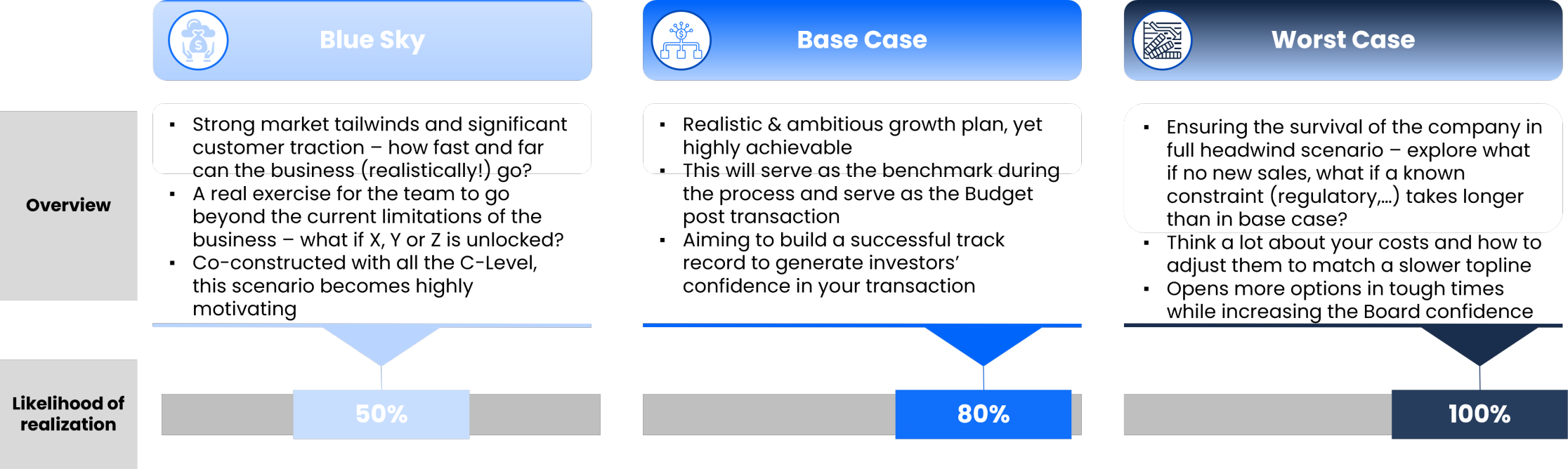
It’s crucial to stay calm when the market wobbles. Building such scenarios become your superpower. When sales or funding delays hit, the levers are ready: slowing hiring, renegotiating vendor terms, reallocating marketing spend toward proven channels. You feel empowered and can communicate efficiently with your Board to make the strategic adjustments needed. This will ensure in all climates, rain or sunshine - you remain the Master of your Destiny.
News Roundup
Trachet in the news
Your go-to roundup of Trachet in the news, key deals in the UK/EU startup arena, and emerging trends to watch.
→ Founders Discussion - Extend your Runway: Strategies for Optimizing Financial Resources & Managing Cash Flow – VivaTech
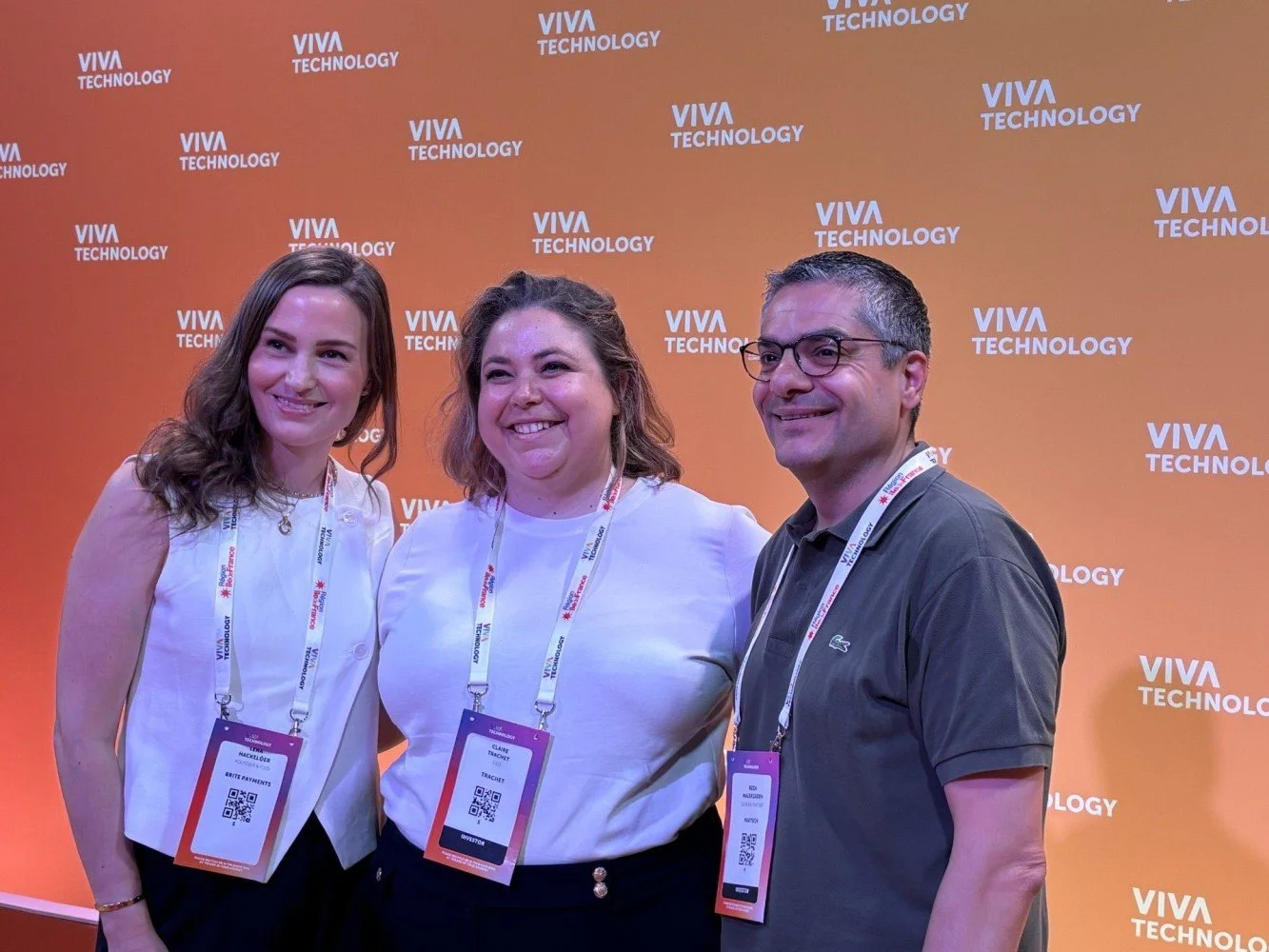
Before raising your next round, making sure your existing resources last longer can give you a critical edge. Claire Trachet, Lena Hackeloer and Reza Malekzadeh explored actionable strategies to extend your runway by managing burn rate and optimizing how you allocate your capital.
→ London stock market could face its biggest blow yet if AstraZeneca exits – CNBC
Claire Trachet spoke with Chloe Taylor of CNBC and told her that AstraZeneca shifting its listing to New York would represent “a memorable loss” for the London Stock Exchange.
“Given the complexity of the company, this isn’t simply because of liquidity or valuation advantages often cited by departing firms, rather a trifecta of underperforming capital markets, regulatory constraints, and misaligned incentives that make it harder to scale and reward innovation at home,”
Claire added that London-listed companies with a combined value in excess of $100 billion had already made the move to New York in recent years — and AstraZeneca’s departure alone would more than double that figure.
“The potential move makes it painfully clear to global markets that the UK is losing its edge on the needs of world-class, scale-driven companies. This isn’t an isolated story — and that’s the biggest issue. It’s part of a broader shift, where founders and boards are increasingly looking to the US for deeper capital, stronger support, and a more ambitious investor base.”
→ Can M&A advisers afford not to use AI? – FTAdviser
Claire Trachet, CEO of M&A advisory firm Trachet, writes: “Tech-enabled advisory isn’t about shortcuts. It’s about relevance and creating value for our clients.”
She explains: “AI can bring real value across the deal cycle - from surfacing insights to identifying red flags - but over-reliance risks reinforcing bias and filtering out the very outliers that make deals special.”
On the future of the sector, she adds: “The real question isn’t whether we use AI - it’s what kind of business model we’re building. Scale through automation or value through trust? That choice will define the next decade of dealmaking.”
→ Wise New York move an embarrassment on fringes of City pow-wow – The Times
According to Claire Trachet, CEO of tech business advisory firm Trachet: “This move sends a powerful signal to any scale-up currently weighing a London IPO.”
→ Are Europe’s public markets a no-go for tech companies? – Sifted
Claire Trachet, founder of advisory firm Trachet, says: “Wise shifting its primary listing to the US is not just a blow to London — it’s a signal that Europe as a whole is struggling to remain relevant in the next phase of global tech financing.” “If Europe can’t offer a viable, attractive path from Series A to IPO at scale, it won’t just lose listings - it will lose its pipeline of future champions and that’s the bigger risk.”
What we’ve been reading
→ Europe's start-ups are using AI to reimagine business models - Financial Times
John Thornhill maps out the 150 European start-up hubs recognised in this Financial Times report. They have helped incubate a new generation of ambitious businesses, including Klarna, Celonis, Isar Aerospace, Hugging Face, Alan and Pasqal, that span the finance, software, space, artificial intelligence, insurance and quantum industries.
→ H1’s biggest M&A deals - Sifted
Ruggero Di Spigna summarises H1 2025's biggest M&A deals as well as the most active European VCs and the sectors which have been lighting up most.
While the vast majority of deal sizes were undisclosed, five disclosed exits stand out:
Mobile gaming startup Dream Games’s €1.1bn buyout by CVC Capital Partners
Quantum company Oxford Ionics’s €968m acquisition by US quantum company IonQ
Austrian software company TTTech Auto’s €568m purchase by chipmaker NXP Semiconductors
Dublin-based legal software provider Brightflag’s €425m acquisition by Dutch PLC Wolters Kluwer
Belgian drug discovery company EsoBiotec’s €386m acquisition by drugmaker AstraZeneca
→ Wall Street ‘mocks’ idea of London listing, fintech boss says - City A.M.
Cleo’s founder Barney Hussey-Yeo said Wall Street bankers “mock” the idea of a London IPO, assuming his £107m-revenue fintech will list in the US instead. He urged Chancellor Rachel Reeves to scrap stamp duty on tech stocks and accelerate reforms, warning that without action London risks losing more champions to New York.
→ London’s IPO drought: advisers bank on a bounceback - Financial Times
London’s IPO market is finally showing signs of life after years of stagnation, with equity capital markets activity picking up as firms brace for a possible rebound in public listings and public M&A. Meanwhile, advisers and legal recruiters in London are preparing for renewed demand—putting associates on beach-ready rota schedules in anticipation of increased deal flow, particularly in ECM roles
→ Europe’s VCs Are On Pace for Lowest Fundraising Year in a Decade - Bloomberg
European VC-backed firms are heading for their worst year of fundraising since 2015, as investors avoid putting money in an industry that’s struggled with returns. VC funds based in Europe raised €5.2 billion in the first half of 2025, according to PitchBook, and have seen declining returns from their investments for the past four years. Investors are drawn to companies in the artificial intelligence industry and local defense companies, with European venture capital funding in defense and aerospace already outpacing the totals from 2024, according to PitchBook.
